Hey, how are you doing? I hope you’re doing okay. I know you have missed me. I mean, who wouldn’t? Anyway, I have been great. Still stuck in Nairobi, Kenya. Lord knows I need a vacation or something. The weather here is terrible. It was just sunny the other day. Now it feels like I’m in Alaska. By the way, why would anyone even go to Alaska willingly? What do people even do up there? Back to business, shall we?
You have heard of the space race, yeah? If not, then let me explain. The space race was a 20th-century struggle between Russia (known as the Soviet Union or USSR, if you may) and the United States. The race began on 2nd August 1955 after USSR responded to the U.S. The U.S. had announced wanting to go to space. Most people would say that the U.S. won the race. However, did they really? There are a lot of theories speculating that they faked their moon landing. What do you think?
“Have you ever seen a n*gg* that was black on the moon?’ J. Cole asks on his song “Immortal.” Well, have you? There was a black man who was close to landing on the moon. His name is Edward Dwight Junior, a U.S. pilot. Unfortunately, he did not leave the earth’s atmosphere. We’re proud of you regardless, Edward.
Back in the motherland, there was a man called Edwuard Makuka Nkoloso. Such a coincidence, don’t you think? Continental Africans can guess where the man was from. If you can’t then, we need to revoke your black card. Of course, he was from Zambia. Zambia was the first African country in the space race. However, with an unexpected twist!
In 1964, Edwuard embarked on training the first Africans who would land on the moon. He intended to beat the U.S. and USSR in the space race. Born in 1919, the man grew up to be a science teacher and director of Zambia’s National Academy of Science. It should be noted that he also fought in the second world war. Furthermore, he was part of the resistance movement against the British in Rhodesia.
He set up a makeshift facility on an abandoned farm in the outskirts of Lusaka. He coined the term ‘Afronauts’ to refer to his trainees who would land on the moon. He wanted to send 17-year-old Matha Mwambwa, two cats, and a missionary to space. There were also men involved in the training. At the facility, he would train the Afronauts on the feeling of weightlessness by rolling them downhill in an oil drum. Aside from that, a tire swing was also used. He would cut the rope when they reached the highest point to produce the feeling of free fall. I told you there was a twist. They also walked on their hands as he believed that was the only way humans could walk on the moon.
Here’s an excerpt I found from the New Yorker. It’s so entertaining to me. I did not want to change anything on it:
“Nkoloso wore a standard-issue combat helmet, a khaki military uniform, and a flowing cape—multicolored silk or heliotrope velvet, with an embroidered neck and festooned with medals. His astronauts sometimes wore green satin jackets with yellow trousers. (They were quick to explain that these were not space suits: “No, we are the Dynamite Rock Music Group when we are not space cadets.”) Godfrey Mwango, at twenty-one, had been tasked with the moon landing. Matha Mwamba, sixteen, was headed for Mars. Nkoloso’s dog, Cyclops, was to follow in the paw prints of Russian “muttnik” Laika. The other cadets carried a Zambian flag and a staff in the shape of “a crested eagle on a dinner plate atop a sawn-off broomstick.” Nkoloso said he had been inspired by his first airplane flight. When the pilot refused to stop the plane so that he could get out and walk on the clouds, Nkoloso made up his mind to enter the space race”
Of course, people did not take Nkoloso seriously. He, however, held faith in his project. During one interview, he told reporters that he knew people thought he was indeed crazy. He further stated that he would be laughing the day he plants Zambia’s flag on the moon. I love his faith and confidence. That is how confident you should be when defending your thesis.
The Afronauts would be launched in a rocket named D-Kalu, named after Kenneth Kaunda. Do you know who he was? Also, Kaunda…Kaunda suit? Only real ones know what a Kaunda suit is. There was actually a section featuring stories of a guy who wore the Kaunda suit in the Standard or Nation newspapers. I don’t quite remember very well. Sorry, I’m digressing. The rocket would be launched on Independence Day, which was… I won’t answer that for you. Go read. However, it did not launch because it was deemed to be a joke. I mean, the rocket was a drum-shaped vessel made from aluminum and copper. It looked ridiculous, as per reports.
Needless to say, the whole project failed. Edwuard claimed that it was because of a lack of funds. He reportedly asked UNESCO for a grant of 7,000,000 Zambian pounds but was denied. He did not give up but asked private foreign companies and sources for 1.9 billion, which was also denied. Apparently, he only got a 10 Rupee note from an Indian schoolboy. If you laugh, you’re going to hell. Matha also got pregnant by one of the men in the program and had to withdraw from the program. One of the men joined a local dance crew. The others disappeared. Nkoloso also claimed that someone intentionally sabotaged his rocket. He stated that foreign powers did it. I’m not hinting at the U.S. and USSR governments in any way.
Here’s an excerpt from the article “We’re going to Mars! – WITH A SPACEGIRL, TWO CATS AND A MISSIONARY – by Edward Makuka Nkoloso.:
“I feel the Zambian government should help now if we are to become controllers of the Seventh Heaven Interstellar space. The government must pass strong bills to deal with the satanic plots of our enemies. I have known for a long time that Russian spies are operating in Zambia. Yes, and American spies are all over town too. They are all trying to capture Matha and the cats. They want our space secrets. These people must be dealt with immediately. Detention without trial for all spies is what we need. Otherwise, I am happy with the Government but it must encourage youngsters to join the academy.”
Okay, I did not explain the Seventh Heaven and missionary parts. So, yes, there was a missionary. Edward believed that there was a strange race of primitive savages occupying mars. Edward is making us sound like white people now. Anyway, he stated that after observing mars from his secret headquarters. He wanted Zambia to be the controller of the seventh heaven of interstellar space. I think the only thing separating us from white people here was that the missionary was not to force the conversion of this race. Phew. No, but imagine Christianity in space??????????
The funniest bit of this is when Kenneth Kaunda was asked about the program in 2016; he said that all of it was just a joke. Unfortunately, Nkoloso is not around to verify it for us as he died on 4th March 1989. May he rest in peace. He is said to be a visionary and one of the inspirations of Afrofuturism. I think he is. I hope I have taught you something new today. You’re welcome. Be blessed.
Hey, how are you doing? I have been great, thanks for asking. I’m sorry I went MIA. Writer’s block happened but I’m trying. Plus, we’re in the middle of a pandemic, so cut me some slack, please. Thank you, however, for still reading my articles even without me posting. I appreciate. While I was away, I launched a creative blog called “Of Monologues, Cigarettes and the Damned.” You can check it out on WordPress and give me reviews. In other news, according to the health cabinet secretary, Kenyans might have been vaccinated with water in some institutions. Sometimes, this country leaves me speechless. Tano tena, I guess.
Only the real ones will get this
Economic structures of societies involve the activities that generated income to the said societies, such as agriculture, mining, trading, etc. Before the introduction of money, most African communities used the barter trade system. Barter trade is the exchange of goods for goods of the same value. The introduction of money made trade easier. Gold and silver coins used. The economic structures of the two societies were similar, with very few differences. I will explain the structures of the two societies separately to give each sufficient and requisite attention.
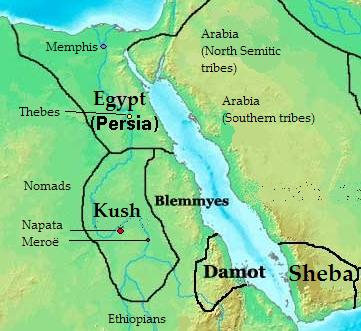
KEMET As you can see from the map, River Nile passed through Kemet. This strengthened the economic structure of the state.
The water and fertile soils from the Nile promoted agriculture. There was animal keeping and crop growing. The crops mostly grown in Egypt were grains like barley and wheat. Alcohol was made from them. Remember the festival of drunkenness? Tell me you do, or I’ll… There were also vegetables grown like onions, leeks, cucumbers, beans etc.
Pottery was also one of the economic activities. The Nile provided clay which was used in pottery. Egyptian pottery was beautiful. Still is, actually.
Source: Pinterest
There was also papermaking, particularly papyrus paper. Remember the scrolls they wrote on? They were made from papyrus. So, let me hear someone say that Africans did not read and write before the coming of the white man.
Source: Metropolitan Museum of Art
Cloth making was also one of the activities. Egyptians wore light clothes because of the temperature of the area. It was too hot, man. Men wore loincloths and kilts made from linen. Women wore dresses made from the same. Linen is a really light material. I wish I could wear kilts. They seem so comfortable.
There was also jewellery making. They were made from gold, silver, precious stones etc.
Source: Pinterest
They also engaged in trade. In exchange for the products listed above, they would get precious stones, wood, copper, silver, livestock, gold etc. Those items were acquired from other nations. Kush provided Egypt with a lot of gold.
The nation also got rich from taxes. Egyptians were heavily taxed. For instance, it was a feudal state. That means that the Pharaoh owned all the land, and the rich would be allocated the land in exchange for services and taxes. Most of the proceeds from this land would be sent to the Pharaoh and stored for distribution. Traders passing through the region were also taxed.
KUSH For the last time, I am not talking about the kush some of you partake. Kush was an important trade centre in the ancient world. It connected the Mediterranean to the African interior. Its strategic position made this possible. That made trade and commerce much more effortless. Three cities, namely Kerma, Napata and Meroe, served as trade centres in the empire. Each city served a unique purpose at a different time in history.
Kerma was the first capital city of Kush. It was strategically located midway between Egypt, Central Africa and the Red Sea. Intermediaries transported the goods between North and Central Africa. According to archaeological evidence, crop cultivation, pastoralism and gold mining and processing were the main economic activities in Kerma. I mean, you definitely expected pastoralism because Nubians like the Ankole and Maasai still practise pastoralism. Wait, you did, right? Other trade items were pottery, jewellery, precious stones, ivory and rare luxurious animals.
Napata served as the next capital of Kush. Not much is known about the economy of Napata. Its economy was based on the gold trade. Locals practised agriculture and animal husbandry. This is so short it feels awkward. It feels like something is missing.
Satellite images of ruins of Napata
The capital was eventually moved to Meroe. This was primarily due to strategic reasons for war. Kush was at war with the Romans, and Meroe was in a strategic position for war. Remember the battle where the Kushites defeated Alexander the Great? Yeah, that one. Aside from that, Meroe had an excellent climate ideal for agriculture and cattle breeding. It was located at the edge of the Nile, serving as a great commercial centre. Its positioning also made it easier for the kingdom to engage in the Indian Ocean trade. Check the map. The meroitic economy was based on iron production and agriculture. Other trade items were ivory, hardwood, luxury animals, animal skin and feathers etc.
I guess that’s all for today folks. This has been really short. Anyway, thank you for reading. Be blessed. Remember, the motherland breathes and lives inside you!
Hey guys, it’s your local celebrity. I will be signing autographs soon; meet me at Honey and Dough *insert Majimbo’s laugh*. When women said,”Consistency is key”, I certainly did not feel that. I am really sorry about my inconsistency; life just happens you know. However, thank you all for the support. I really appreciate. I was featured in the papers recently (Daily Nation) and I think it was a great win and I can die a happy man. Anyway, I know you have missed me so let’s get to it, shall we now? Wait, before we start, I hope y’all learnt how to do your make up, both ladies and gentlemen. You cannot just look crusty out here and that’s on…
Let me tell you, education in the two civilizations was really advanced. First, the baby stayed with the parents till they were 7. Parents taught them moral basics and all. Afterwards, they were exposed to a school curriculum which lasted 40 years. 40 years??? My fellow Kenyans, huu ni ungwana kweli? I mean, I have done about 15 years and I am already tired, how would I do 40? Even Pythagoras (the one who invented the Pythagorean theory of triangles, which I’m still wondering how I will apply it in my daily life) did not finish. He only did 22 years. Yes, Pythagoras was Greek but studied in Egypt because the system in Egypt allowed foreigners. In fact, quite a number of scholars studied in Egypt. They include Plato, Exodus, Thales, Solon etc. These foreigners referred to the system in Egypt as the Mystery System. I think it’s because they saw maajabu hehehe (please laugh).
Students at school.
Now you, you are always talking about becoming like your ancestors and yet 8 years of school are too hard for you, which ancestors are you becoming like?? Read and stay in school, dont make me come there and slap you (respectfully of course). Small small 4 years in university are giving you stress, check yourself!!
I know your next question is what was in this system? Okay, there is intense and INTENSE. This system was INTENSE. However, it equipped you with a lot of knowledge and skills. It basically molded a whole person who would develop themself and the society. It helped create an educated leadership which would progress the society (and the leadership did help unlike in a country called KENYA where the leadership just destroys and loots). Furthermore, the system was meant to help you with your spirituality as spirituality was very important to the two civilizations as stated in the previous article, which I trust that you’ve read.
“And Moses was learned in all the wisdom of the Egyptians, and was mighty in words and in deeds”
Acts 7:22
Okay, let me answer your question now. According to The Ancient Kemetic Roots of Library and Information Science by Itibari M. Zulu, Th.D, students were required to master the seven liberal arts of: grammar, rhetoric, logic, geometry, arithmetic, harmony/music, and astronomy; the ten virtues of: (1) the control of thought; (2) the control of action; (3) steadfastness of purpose; (4) identity with spiritual life to higher ideals; (5) evidence of a mission in life; (6) evidence of a spiritual call to Orders or the Priesthood in the Mysteries; (7) freedom of resentment when under persecution or wrong; (8) confidence in the power of the master teacher; (9) confidence in one’s ability to learn; and (10) readiness or preparedness for initiation (James, 1954, 30-31), and the union/principle of opposites, such as: negative-positive, male-female, material-immaterial, body-soul, love-hate, hot-cold, wet-dry, fire-water, war-peace; and a general Kemetic education requiring a dedication of one’s time to: (1) become a scribe (a highly honored profession which required disciplined study directed by a master teacher), (2) change (transform) because of new knowledge, (3) conduct independent study to improve one’s self, (4) study nature (natural phenomena), (5) believe in one supreme creator (God), (6) unify one’s consciousness with the universe, and (7) become like the supreme creator (God); with the overall aim being to exemplify the NTRU (diving) principles of Tehuti (a deity of writing and learning…) and Maat (a deity of truth, justice, harmony, equilibrium, cosmic law, and righteousness), and be a holistic (mind, body and soul) blend of theory and practice.
PS: GO BACK AND READ THAT WHOLE THING YOU LAZY KING/QUEEN
From the passage above, you have seen that their education involved a lot. In fact, quite a number of concepts being used in the modern world were originally from Egypt. Let me give examples: Hippocrates, who is considered the father of medicine, learnt in Egypt. He got his ideas from the explorations of Imhotep. Imhotep developed diagnostic medicine 2500 years earlier than when Hippocrates visited Egypt. Ancient Egyptians had knowledge in medicine. The Ebers Papyrus (I am not comfortable with the fact that it was named after the person who bought it) provides herbal remedies for different diseases. The Edwin Smith Papyrus (still not comfortable) is an ancient Egyptian text on surgery.
Edwin Smith Papyrus
They could read and write. I HATE IT WHEN WHITE PEOPLE OPEN THEIR MOUTHS TO SAY THAT THEY INTRODUCED WRITING IN AFRICA. We are told that Osiris (one of the earliest leaders) introduced a writing called Medu neter or “writing of God”. The “writing of God” is commonly known as hieroglyphics. However, the people of Kush at some point changed their writing to meroitic hieroglyphics to keep their secrets from enemies. They wrote on scrolls made from papyrus reeds. They also had ink to write which was basically a mixture of vegetable gum, soot and bee’s wax to make a black ink. Colored ink was made by replacing the soot with other materials like red ochre.
Egyptian Hieroglyphics
Meroitic Hieroglyphics
There was also painting. They had a variety of colors for their painting just as they had for the ink. Painting could take place on a variety of surfaces like papyrus rolls, walls, wood etc.
A painting on stone
The temples not only served as places of worship but also as universities. Two famous universities are Waset and Ipset Isut. In the universities, there were libraries. Dr Ivan van Sertima states that the libraries were divided into 5 departments namely astronomy and astrology (shout out the astrology community); geography; geology; philosophy and theology; law and communication. The priests in the temple also served as teachers. This is because the system that went on for 40 years basically equipped them with knowledge on everything. They could teach various subjects and also conduct worship. Furthermore, they also had military knowledge and in times of war, they would fight. The education in the temple made an all-round person who would serve the whole community perfectly. At Least there you could ask a physics teacher a question without them telling you “Do I look like your maths teacher? Go ask him that burukenge hii.”
There you go Keith Angana, I believe you’ve been answered
They also underwent initiation in the temple. Initiation is basically a rite of passage. All African communities had initiation. Initiation made one ready to serve the community. One was taught traditions of the society. Furthermore, one was taught life skills like critical thinking, responsibility, teamwork etc. There was a lot of emphasis on teamwork.
Magickal initiation
Due to their knowledge, the society was technologically advanced. However, Kush was said to be more advanced than Kemet. This is because the lower population in Kush demanded that they had to rely on technology to do a lot of things. For instance, because agriculture was really important to the two civilizations, they came up with certain inventions: the ox-plough, sickle, irrigation schemes and canals. Those inventions easened labor.
Agriculture was further easened by the invention of the first calendar. This is because one was able to observe different seasons. There were two calendars. The first was the solar calendar which was used for day to day life. The second was the lunar calendar which was used for festivals. The calendar was invented through observation of the cycles of the sun. They also had clocks which were basically sundials (hope you paid attention in class 2). One reads time by observing the shadows made by the dials. There was even a water clock which I think functions in the same way an hourglass works.
Calendar
Remains of a sundial
Waterclock
How it works
They had quite a number of industries there. There was iron smelting, glass smelting, drilling, mining, pottery, furniture etc. They even had heated bathrooms with heated piped water. Some sources even say there was electricity. There was also gunpowder. However, only high priests and priestesses knew how to make it because they were used in the worship of God Amun. If they actually used the gunpowder in war then maybe the civilizations would still exist. Safe to say they were caught lackin’ by their enemies
King Tut’s knives
I think the most famous part of their technology is their architecture, particularly the building of pyramids. No Karen and Kevin, aliens did not build the pyramids but ancient Egyptians who were BLACKITY BLACK BLACK. I have two stories when it comes to the pyramids. The first one is that Kush built the pyramids first (by the way Kush has more pyramids than Egypt). Ahmed Bilal, Sudanese minister of information, claims that the pyramids at Meroe, Sudan, are 2000 years older than those in Egypt.
Sudanese pyramids
The second one is that the pyramids in Egypt are older. The oldest known pyramid was built in Saqqara. The architect was Imhotep who was also a priest and healer (Remember when I said that education enabled you to be an all-round person). It was built from hewn stone which was introduced by Pharaoh Djoser (Zoser). The pyramid was built for Djoser to be a royal tomb. Djoser’s tomb set the foundation for other royal tombs which were made as pyramids. Egyptian architecture had so much influence in different societies for example Greece. Diodorus Siculus, a Greek historian, in Library of History states:
“Thus, in conformity with the ingenuity of the Egyptians, the wooden statue in Samos is cleft in and the figure divided down the middle from the crown of the head to the genitals, each side being identical to the other. For the most part, they say, it resembles the statues of the Egyptians, in that its hands are held straight and the legs are parted in stride”
Egyptian architecture
Egyptian architecture
Greek architecture
Also their military relied on their technology and education. Their education and technology enabled them to build weapons, for instance, iron was used to make daggers, axes etc. They also had boats for warfare (or you thought they just flew to Europe?). They had knowledge on marine navigation due to their holistic education. It should be noted that Kush had a stronger military than Kemet. Kush was exceptionally known for their use of the longbow. That is why Kush is often referred to as the “land of the bow.” (Nubians going to war)
Transport was also made easier. There were boats to be used for water travel. There were also chariots. Easier transportation made things like trade easier, particularly for Kush which relied heavily on trade.
In conclusion, education and technology were really important for the advancement of the two societies. The societies relied on education and technology for their progress. It is said that the system of education in ancient Egypt set the foundation of modern day education. I guess that is all for today. Take care. Remember, the motherland breathes and lives inside you.
(Put your religious beliefs aside when you start reading this)
Hey, how are you doing? It’s been more than a fortnight since we interacted, yeah? How have you been? I’ve been great I guess. Wait, two things made me sad this week. The first one is Penchester FC. That team will give me high blood pressure I swear. The second is the loss of a former schoolmate, Abraham Mutinda. He passed on sometime back in Russia where he was studying engineering. Currently, his body is still there because of the costs of bringing him back. THE KENYAN EMBASSY IN RUSSIA HAS DISTANCED ITSELF FROM THE ISSUE. Please help us raise some money. Any amount would be appreciated. Oh and this article is dedicated to him. May he rest in peace.
To be African is to be spiritual. Spirituality basically entails the relationship between you and the universe. The universe is a complex structure with many things. Like I said earlier, religion and spirituality are different. Religion is a structure created to help you achieve spirituality. People make religion. Different religions have different approaches to spirituality. The religions are like different paths to the same destination. However, some religions have lost view of the destination and no longer focus on achieving spirituality. That causes many to get lost in the way. Spirituality is inside you. It’s waiting for you to unlock it. Think abourrit…
Spirituality was very important to these two civilizations. They were built on spirituality. They believed that the universe was made up of energy. Furthermore, they believed that the creator was a spirit who took many forms or manifestations called Neters. For instance, there were gods, goddesses, animal gods etc. However, it should be noted that they were not polytheistic as per common belief. The forms came from one source of energy who was the creator.
Let’s start with the creation story. In the beginning there was Nu. Ra (the sun) emerged from Nu (the waters) and produced Shu (god of air) and Tefnut (goddess of moisture). Ra was the creator. Shu and Tefnut gave birth to Geb (god of earth) and Nut (goddess of skies). All aspects of the physical universe are met. Then 4 human children were born namely: Osiris (god of the pharaohs), Seth (god of devastation), Isis (goddess of motherhood), and Nephthys (protector of the dead).
Osiris (Ausar) then became leader of early Kush. He then united Kush and Kemet and became leader of both with his wife/sister Isis (Aseth) as his companion (sweet home Alabama, innit?). He was popular amongst the gods and humans. He also commanded respect. He taught humans agriculture, civilization, writing (commonly referred to as medu neter or writing of God), theology etc. Seth then became jealous of him and conspired to kill him. Seth killed Osiris, dismembered his body into 14 pieces and distributed them all over Egypt. Isis fled and Seth took over Kemet.
Seth to Isis
Isis sought to recover her husband’s body. She found only 13 out of 14 pieces. She didn’t find his penis. She made him a wooden penis (wanted to make a joke but my page is for the general audience). She reconstructed his body and mummified it creating the first mummy. She wept for her husband. She was still a virgin. Osiris then made her pregnant from the skies and she gave birth to Horus (sounds familiar). Horus was out to avenge his father. He finally defeated Seth and flew to the heavens as a hawk to tell his father of his victory. Osiris then resurrected after 3 days during the full moon and took the throne of the underworld.
Osiris on the throne with Isis and Nephtys behind him
The Egyptians built a tekhenu in honor of Osiris’ resurrection. It was a structure which resembled an erect penis. The tekhenu signified fertility. The Romans called it an obelisk. Emperor Augustus took one from Egypt and transported it to Rome where it sits outside the Vatican. There are also more, about 13, taken to Rome by different emperors. There is also one outside central park in New York ,which was taken from Egypt, amongst many other major cities.
Tekhenu in EgyptTekhenu in VaticanTekhenu in Washington
What happened to Seth? SETH WAS THROWN TO THE UNDERWORLD AND MADE TO BURN FOR THOUSANDS OF YEARS BWAHAHAHAHAHA!!! That’s what most of you expect. However, that was not the case. Seth was essential. He was not evil. Now pay attention. They believed in Maat. Maat was the concept of order and righteousness. For there to be order, there must be disorder and that is where Seth comes in. The opposite of Maat was Isphet which was the concept of imbalance or disorder.
Seth or Setekh
Maat was represented by a female figure with wings. When one died there was judgement.. During this judgement, a feather from Maat would be used. So basically, your heart would be weighed on a scale against the feather. One would declare their innocence by declaring the 42 ammunitions/ commandments/ rules of Maat. If you were true to what you say then your heart would be lighter than the feather. If not, it would be heavier and that would mean you were guilty or did not Maat. Your heart was then eaten by Ammit who is depicted with the head of a crocodile and body of a hippo. Then you would be recorded in the book of judgement and Horus would take you to Osiris, who is the king of judgement. After that, one would either go to heaven or hell.
Ma’atJudgement of Ma’at. You can see Anubis guiding one. A heart is being weighed against the feather of Ma’at. Toph is writing on what appears to be a scroll. Ammit is just chilling, waiting to eat.Horus bringing people before Osiris
Their belief in heaven or hell showed belief in the afterlife. According to the Papyrus of Ani (Egyptian Book of the Dead), they believed that the soul had nine parts which only one did not proceed to the afterlife and that was the body (kha). Due to the belief in the afterlife, certain ceremonies and rituals were carried out on the dead, Furthermore, the dead were mummified. The goal was to help them have a smooth transition to the afterlife. Anubis is said to have helped in the mummification. Anubis was the god of death and mummification. He guided one in their journey to the afterlife. He also protected the bodies of the dead from being eaten by jackals. Funny thing is that Anubis is depicted with a jackal’s head.
Anubis guiding one in the afterlife
Often you see gods in paintings carrying a symbol called an Ankh (pictured below). The ankh is a hieroglyph for “life” or “breath of life”. Ancient Egyptians wore the symbol as pendants around their necks. Even these days, you see people with such pendants (I have one). It symbolized mortal and afterlife existence. It was adopted by Coptic Christians and modified to the cross. Earlier on, christians used a fish as a symbol of their faith or for Christ. There is also an argument that since the ankh represents both masculine and feminine forms of god, Christianity only took the masculine form. There is also an argument which states that the ankh is entirely female.
The Ichtus which is the original symbol of Christianity Well on this. When you look at the character of God in Christianity, he exhibits masculine qualities. The feminine aspect of God is not present in Christianity, or what do you think?One argument states that this is the meaning behind the ankh. It makes sense to me because you need a harmony of the masculine and feminine energy to produce life. The ankh is a symbol of life.Another argument states that the ankh was derived from the womb, which is also a symbol of life. It does make sense too. Some say that this is fully genocentric. Well, this is my thought. You can see sunset and sunrise on the pictures yeah? I will talk about Amun-Ra and how the sun represents him in the next paragraph. For the sake of this case, the sunset and sunrise is used to represent the masculine. Anyway, that’s just my thinking. Do your research and decide
The title of God was Amen-Ra or Amun-Ra. Amun was a God from Kush. Amen merged with Ra to become Amen-Ra. Those two names represented different qualities of God. Amen meant the creator who is hidden and everywhere. He was represented by the sun. At midday when the sun was highest, the aspect of him being the creator and sustainer of life was brought out. At that time, he was referred to as Ra. At sunset, when the sun would disappear, the aspect of being hidden appeared. At that time, he was referred to as Amun. He was unseen and powerful. He knew, understood and foretold everything. When you think about it, it resembles the invisible, omnipresent and omniscient aspects of God in Christianity. A ram was associated with His worship. This is because all this was during the astrological age of the lamb or rather Aries.
Amun
It was common to see animals associated with gods. For instance, Horus is represented by a man with the head of a hawk. There was Apedamac who was the lion god from Kush. Lions represented power. In many cultures, we see that they use lions to represent this. Animals were really important in the two civilizations. They were kept as pets, food and even used in war. For example Queen Kandaka (Candace), who was a brave warrior, defeated Alexander the great when he wanted to invade Kush. She used lions in battle. You thought “Fufu, go get di lion” was a mere joke, huh? The motherland is ahead of her time and she never misses (unlike Raheem Sterling in the quarter finals lol).
Apedamac
Amun-Ra had a companion called Mut. Remember when I mentioned that God is a spirit who took many forms? Now in this case, the form was the female form to represent the feminine energy. Mut was the divine mother. She was depicted as a woman wearing a double crown headdress and sometimes with a vulture headdress. After her husband Amun merged with the sun, Ra, she was called the eye of Ra or, as many people know, the eye of Horus. Goddess Mut incarnated into many other different goddesses with time like Hathor, Sekhmet and Bastet.
Mut
Amun-Ra and Mut then gave birth to Khonsu. I hope you’ve taken note of the family structure. Khonsu was the god of the moon. He was depicted as a young man with a pose like a mummy with his arms crossed. In modern culture, he is depicted as a man with a falcon head with a moon disk on top. During the new moon he was considered a mighty bull but during the full, a neutered bull. He was also linked with fertility as it was believed that the moon had an association with menstrual cycles. Aside from that he was linked to love, protection and fierceness.
Khonsu
Those three were not the only gods and goddesses. There were plenty of them. However, we shall not focus on them this time. Basically, every aspect of the universe was controlled by a god or goddess. We see the earth being controlled by Geb, the air being controlled by Shu, water by Tefnut etc. The spirituality of the people in the two civilizations related to the whole universe. There was no part of the universe which did not have a form of spiritual energy.
COMMERCIAL BREAK: Are you tired? I know it has been long and thank you for your attention. Butttttttt, we’re not stopping now so grab some snacks. If you don’t have one, remember you’re a snack. Okay back to the topic…
A toast to being a snack. I’m 2 steps ahead of y’all though because I’m a whole meal 😂😂. (It would have been 3 steps if I didn’t have asthma *someone pass my inhaler*)
The worship of the deities was conducted by high priests and high priestesses. The high priestess was in charge of the worship of goddesses. The civilizations were so advanced that even gunpowder was used in the worship (only high priests and priestesses knew the formula for making gunpowder). At first, according to Diop, high priests were selected individuals. However, as the Kemet became centralized, the King assumed the role of high priest for power reasons.
There were festivals (heb) held to honor the deities. The high priest and priestess conducted the festivals. There were many festivals to honor them. For example, the Festival of Bast which was in honor of cat goddess Bast. Bast was the protector of women and children. She was also the guardian of hearth and home.
Bast
Spirituality was taught to everyone. There was no discrimination. Everyone had spiritual knowledge as it was really important to the society. Some of the spiritual practices included yoga, meditation, chakras. Their spiritual practices spread far and wide. The practices spread to Europe and Asia through scholars who came to learn in the civilizations and also their military conquests. Greece mythology, for instance, has mimicked a lot of Egyptian mythology. Yes, they copied a lot.
Yoga
As we have seen, the spirituality was really complex. It covered every aspect of the universe from the heavens to beasts. King Akhenaten, husband to Nefriti, tried to make the disk of the sun (Aten) the sole focus of worship during the 18th dynasty. Akhenaten was not his real name. His original name was Amenhotep but he dropped it. Akhenaten meant “one of Aten” or “great user of Aten.” His move excluded other aspects of the universe covered by spirituality. He also tried to erase some traditional gods like Amen. I feel like his move was more of a power move because he wanted to centralize power to himself. In the long run, we see that when he died, Kemet reverted to its previous stand.
The spirituality of the two civilizations formed the foundation of many religions. For example, Christianity especially when it comes to Horus. Look at the picture below. The first picture is from a sculpture of Aseth and Horus in ancient Egypt. The next is the black madonna which was popular in Europe at some point. The third is the modern depiction of Jesus and Mary. Also, some spiritual practices like yoga and meditation were taken from their spirituality and are being used in religions like Hindu.
I guess that’s all I have to say on the spirituality of Kemet and Kush. I sincerely thank you for reaching this far. And stop being lazy abi! It was just a few words na (kissing my teeth). Anyway, till next time. Take care and be blessed.
(Have you missed me? I am sorry I took such a long time to post)
Story time…
I am just going to put this out there. First, I went to THE ALLIANCE HIGH SCHOOL. Second, I was not the biggest fan of history back then. Please do not ask what humanity I chose instead. History as a subject just felt so colonized. Why were we learning so much about white history yet we are in Africa? Did not make sense to me. I mean, apart from wars and maybe technology, white history does not have much to offer. Black history, on the other hand, is beautiful and fascinating. We need to learn more about our history. That’s why I started this.
This time round we will be discussing the social structure of Africa’s first civilisations specifically the Kemites and Kushites. Social structure in layman’s term is an arrangement of how human beings interact and live together, this includes their roles in the society. The social structure was hierarchical; people/organisations that were at the top of the pyramid held more authority and determined what was to be done. Below is a visual representation of the ancient social structure:
The Kushites and Kemites were organized in families, often in primary school (I hope you still remember) we were told that family is the basic unit of a society. Family was the core of their societies; this is because they were conforming to the order set by the gods above. It’s more like of the law of correspondence. They believed that the gods were organized in families and so should they and that the disruption of the order could cause disruption of the society at large. In fact, the family (father, mother and son) was the original trinity.
Osiris with his wife,Isis, and son, Horus.
The importance of family in the modern context. Look at our brothers and sisters in the diaspora specifically America. The white man destroyed their family unit. Consequently, that caused a major problem in the black community. For instance, there’s a lack of father figures in many families there. Fathers are important to children as they expose them to masculine energy. The lack of fathers causes a strain in the feminine energy as the mother has to not only expose her children to her energy but also masculine energy. Mothers have done a great job at it, I agree. However, there are certain aspects of masculine energy missed.
Furthermore, there was gender equality, I am sure Patriarchs are shaking their heads in disbelief. Women could inherit land, initiate divorces and even testify in trials. They believed in masculine and feminine energy. The two energies were different, equal and co-dependent. It’s like the concept of yin-yang. The gods had goddesses who were equally as powerful as they were. For instance, Osiris had a wife called Isis. They believed that if one energy was suppressed, then the other would be suppressed too because of the equality. In conforming to the order set by the gods, the sexes had to be equal.
Still on the family system, they did not have an official marriage ceremony. I don’t even think the word marriage existed. Couples just met and informed their parents of their decision to stay together. Some other evidence suggests arranged ‘marriages’ by parents. However, Egyptian poetry tends to refute arranged marriage and shows the aspect of romance in relationships. Men got married at around 20 years and women at the start of puberty which is around 12 or 13 years. Oi mate, things are getting a little bit nonce in here😂😂
My sister is unique – no one can rival her, for she is the most beautiful woman alive. Look, she is like Sirius, which marks the beginning of a good year. She radiates perfection and glows with health. The glance of her eye is gorgeous. Her lips speak sweetly, and not one word too many. Long-necked and milky breasted she is, her hair the colour of pure lapis. Gold is nothing compared to her arms and her fingers are like lotus flowers. Her buttocks are full but her waist is narrow. As for her thighs – they only add to her beauty
Lewis, 203 (Ancient Egyptian poem)
I know you are concerned about the ‘sister’ part. They often referred to their agemates as sister or brother. They referred to the older ones as mother or father. That does not mean that there was no incest. King Tut was born of an incestouos union. His father, King Akhenaten, married his sister. King Tut also went ahead and married his half sister, Ankhesenamun. Her original name was Ankhesenpaaten but she changed it.
There was a contract between the couple which involved transfer of property between them, this sort of created financial obligations between them. Divorce was not an uncommon practice at that time, women were entitled to a third of matrimonial property. These days courts may choose to allocate half so the ancient men should thank their gods.
Married Couple
The couple would also have children. I mean that’s obvious. However, if the couple could not have children, they would pray to the goddess Hathor, who was a goddess for fertility and depicted as a lady with a cow’s head. If they were not blessed, they could adopt a child. There was also contraception. Crocodile dung would be used as BOTH contraception and for inducing miscarriage. One would cover her vagina with crocodile dung. Sounds nasty yes? A mixture of acacia leaves, honey and lint as a block inside the vagina to keep out unwanted sperm would also be used as contraception. There was even abortion as stated in the Ebers Papyrus which was a book with medicinal remedies. Safe to say they were pro-choice.
Goddess Hathor
Cleanliness was really important. According to Herodotus, they washed their utensils. He further wrote
“They [wore] linen garments, which they were especially careful to have always freshly washed. They practiced circumcision for the sake of cleanliness, considering it better to be cleanly than comely,”
Circumcision of males. Source: ancientorigins.net
They considered that being clean was being like the gods and they needed to be like the gods. Furthermore, hygiene was really important to prevent disease. They showered daily, shaved their heads to prevent lice, used cosmetics, perfumes, deoderant and even breath mints. Wigs were worn after one shaved their hair. There were also toilets. Wait? Huh? I thought a white supremacist said something along the lines of “We taught the black man hygiene.”
Mummy of Nubian prince Maiherpri. You can see a natural wig on his head
Furthermore, even in the afterlife, cleanliness was really important. In the “Egyptian book of the dead”, Spell 125, it is written that one cannot go to the afterlife if you aren’t “clean, dressed in fresh clothes, shod in white sandals, painted with eye-paint and anointed with the finest oil of myrrh.” A cosmetic jar was found in King Tutankhamun’s tomb. It was intended to be used in the after life.
Okay, I couldn’t let this part go. Yes, there were cosmetics in ancient Egypt and Kush. Just to be clear, cosmetics are makeup. Now I wonder what men who say they want women who are traditional and do not use makeup will say. Make up was also unisex. Both men and women used cosmetics. Men are still shaking I know.
King Tut’s golden mask. You can clearly see the eye make up. Photo by Blaine Harrington
Some of the materials used as makeup were malachite, kohl (galena), red ochre and henna. No there was no Mac or Maybelline you posh Gen-z twat! Galena and malachite were used on the eyes. Galena was black and shielded the eyes from the sun and malachite offered protection and made eyes appear larger.It was also used on the eyebrows. Kohl was green and added color to the eyes. They were applied using ivory, wood or metallic sticks. Red ochre was applied on the lips and was used to accentuate the mouth. It was also used on the cheeks to redden them. Henna was used on the nails.
Queen Nefertiti. Do you see the wings on her eyes? Do you see the lips? Her make up was on point. Teach yourself how to do make up, stop struggling.
Make up served a purpose. The first one was obviously to look good. Eye make up was used to reduce impact of the sun and repel flies. It was also used to ward off the evil eye. Furthermore, it was to copy the gods like Horus. There were also creams which were antiaging.
Women applying cosmetics. Source: Histrory.com
They often wore clothing made from linen. This is because of the climate in the region which was hot. Linen is very light material. Men wore kilts and women wore dresses as depicted in art. However, the poor and rich had different dressing. For example, in the old Kingdom (we will talk about this stop panicking) men basically wore the same (kilts) but one could differentiate between the classes through ornaments worn. Differentiating between classes in women was easier as the upper class wore long figure fitting dresses which did or did not have sleeves. The dresses had straps which held them in place and sometimes a sheer tunic would be worn over them. The lower classes just wore normal dresses.
Egyptian beadnet dress by Jennifer Brown
They also had jewelry. Everyone wore jewelry. Amulets were very common and had sacred symbols like the ankh. The ankh was a very common symbol then and even now. Raise your hands if you have an orament with an ankh. It was a symbol of life. The jewelry was often made of gold. Somebody call the plumber because they were dripping.
Source; egyptiansymbols.com
A class system existed. There were poor people and rich people. We see at some point the poor people rebel and take possessions of the rich because of the disparity. Did someone say eat the rich? Communists are smiling now. Shout out Jeff Bezos, they are coming for you. Well it was not a capitalist system but rather borderline capitalist. Diop states that the only thing barring the system in Egypt from being full capitalist was the fact that there was no slavery. That was due to the inalienable liberty of the Egyptian citizen. Even those who were conquered were only systematically enslaved (what America does lol) and branded. The system was feudal, meaning land belonged to the king. However, the land was given to persons of nobility and the poor would work and live on that land.
They had quite a number of leisure activities. For example, they had sports like wrestling( unlike WWE, their wrestling was real), fishing, archery, swimming etc. They also had board games like senet (similar to checkers and chess) and mehen (snake). Mehen was a game in honor of the snake deity,Mehen. In the game, a board which had a spiral pattern of a coiled snake was used. The rules of the game are not entirely clear. However, it was a multiplayer game.
Woman playing senet. The painting was found in the tomb of Queen Nefertari
There were musical instruments like flutes, harps, trumpets, lyres, oboes and drums. Flutes were often made from reed or wood. Banquets were popular where people would eat, drink, sing and dance for leisure.
Woman playing the harp
The most famous drinks were beer and wine. Beer (kha-ahmet, heqet or tenemu) was the national drink of Egypt, what’s yours? PLEASE DO NOT SAY KONYAGI!
There was even a festival of drunkenness. The festival was in honor of Ra (the creator) who had saved the Egyptians from destruction by the goddess Hathor. It all starts when Ra is angry with humanity and sends Hathor to destroy humanity. Hathor transformed into a lion and started killing humans. Ra saw the damage and felt pity. He then ordered his messengers to prepare beer and hematite. He then mixed them and they resembled blood and poured the mixture on palm fields. Hathor then saw the mixture, thought it was human blood and drank it. She became drunk and fell asleep. Humanity was then saved. I bet East Africans, particularly Kenyans and Ugandans, would enjoy the festival.
Women celebrating the festival of drunkenness. Photo by Buro24/7Malaysia
I guess that is enough for this time. Someone buy me a drink, this has been very long. Remember I am Kenyan please. Next time, we will examine spirituality and education. Take care. Remember the motherland breathes and lives inside you. Kwaheri!
(I do not own any of the pictures used in this article)
(Please note that this is merely an introductory post and we wont go deep into the topic. It is basically meant to familiarize you with the topic before we go deeper)
For my first post I would like to discuss the first two ancient African civilizations; Kush and Kemet. These names may not be acquainted with you because they now go by different names; Kush is the modern-day Sudan and Kemet is the modern-day Egypt. Majority of people associate Kemet with the large pyramids and the biblical account of Moses and Pharaoh. Most people even go ahead to assume that Kemet (Egypt) is the only place with pyramids, I’m sorry to break it to you folks but Kush (Sudan) has more pyramids than any other place in the world…and that’s on what? Facts.
Map by Kubek15
Kush and Kemet were neighboring civilizations although there is a lot of controversy when it comes to the association and origin of these two cities. One account states that Kemet and Kush had a rivalrous relationship although Kemet developed socio-economically first and became the most powerful civilization by invading and conquering Kush. The Kushites were used as slaves in Kemet to build the pyramids, farm etc. After many years Kush attained their independence from Kemet. It also states that Kemet’s population was made of Arabs and Kush was made up of Nubians. According to archeological evidence it reveals that Kemet was a land of blacks (Nubians) and that Kushites were the first inhabitants. This goes ahead to show how whitewashed our history is; to some extent the narrative pushes the notion that blacks were and are inferior.
I think the funniest part of all this has to be the fact that some of the current Egyptians deny being black. We have seen it on social media. We could see it during the 2018 World Cup and 2019 Cup of African Nations. It’s so funny yet sad. Some even go ahead and deny being African. They claim to be European. Unfortunately or fortunately, Europeans do not claim them. So, where do they belong?
screenshot from twitter
Diop, a historian and author, used the bible and ancient hieroglyphs to show they were black in his writing. He wrote a book called The African Origin of Civilizations. Quite a number of us went to Sunday school right? I hope you paid attention. I hope you remember the story of Ham, Noah’s son who was cursed for seeing the nakedness of his father. One of the curses of Ham is believed to have been darkened skin. The Egyptians used km in their hieroglyphs. Km meant “black”. Diop believed that the km translated to Cam or Ham in Hebrew. Ancient Egyptians referred to themselves as kmt which scholars opposing Diop believed to have meant “black land” in reference to the black soil of the Nile Valley.
Count Constatine de Volney, in his book The Ruins, which talks about his travel to Egypt in 1787, wrote that:
“All the Egyptians have a bloated face, puffed up eyes, flat nose, thick lips- in a word, the true face of a Mullato. I was tempted to attribute it to the climate but when I visited the Sphinx, its appearance gave me the key to the riddle. On seeing the head, typically Negro in all its features…”
“In other words, the ancient Egyptians were true Negroes of the same type as all native Africans. That being so, we can see how their blood mixed for several centuries with that of Greeks and Romans, must have lost the intensity of its original color while retaining nonetheless the imprint of its original mold”
Photo of the Sphinx by Lehnert and Landrock
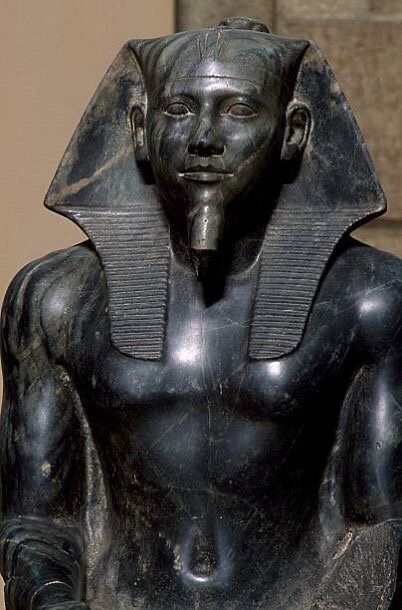
Constatine’s texts reject the whitewashed account of ancient Egyptians not being black. Below is a picture of the statue of Pharaoh Khafre. It is believed that his face is on the Sphinx. Examine his facial features and compare them with Constatine’s text.
Statue of Pharaoh Khafre. Photo by Sandra Vannini
The white washed account tries to use the color of the current Egyptians to oppose Egyptians being black. At some point in history, Kemet was conquered by foreign powers. The nations were Assyrians, Persians, Greeks and Romans. The interactions between those nations and the Egyptians resulted to intermarriages hence a change in complexion and bodily features.
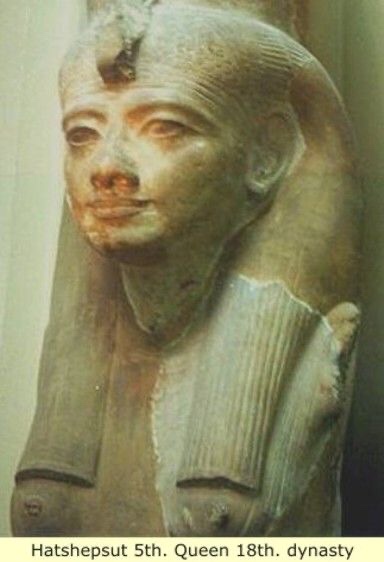
Furthermore, the same account only talks about the rulers after Kemet was conquered by foreign powers, for instance, Queen Cleopatra who is depicted with a light complexion. It pushes the narrative that ancient Kemites were not black. Queen Cleopatra was in the lineage of Ptolemy. Ptolemy was one of Alexandra the Great’s generals. Alexander’s colonies were distributed amongst his generals after his death. Therefore, Cleopatra was not native African but Greek. It doesn’t talk about queens like Queen Hatshepsut who was the second queen of united Kemet and was black.
Queen Cleopatra as portrayed in a 1963 Hollywood movie
At some point in history, as we will learn later, Kush took over Kemet from the Assyrians. This was a move to restore the previous order. Kushite rulers ruled Kemet and are often referred to as black pharaohs of the 25th dynasty. I always feel like the term tries to bring out the narrative that blacks are not native to Kemet. Below is a statue of Mentuhotep II, a pharaoh before the 19th dynasty, examine his features and compare with Constatine’s description.
Even ancient historians like Herodotus say that Egypt was a land of black people. What more evidence do you want? Herodotus loved travelling. He always wrote down his experiences. He literally wrote down what he saw and heard and did not rely on hearsay. He visited Egypt in 490 BC during the Persian invasion. Herodotus in his book second book of history called Euterpe, states that:
…the third evidence is afforded by the people saying there, who are of a black color by reason of heat.
Another version of the same account is the allegation that ancient Egyptian were aliens be. Yes, aliens! This is because of the elongated skulls. What people do not realize is quite a number of ancient African communities had that. Cranial deformation was part of the culture of some communities. It was done when one was still a baby because the skull was soft and easily moulded. Look at the Mangbetu people of Congo. They did that.
Ancient Egyptian elongated skull. photo by Mutnedjmet
Woman from the Mangbetu of Congo. Photo by Kazimierz Zagorski
The same version which talks about aliens states that ancient Egyptians did not have the knowledge to build the pyramids and only aliens could do that. It is undermining, yes? Actually, ancient Egyptians had a vast knowledge is geography, architecture, mathematics etc. They had universities which even admitted scholars from Europe.
Just think, that this race of black men, today our slaves and subject of our scorn, is the very race to which we owe our arts, sciences and even speech
Count Constatine de Volney in his book, The Ruins.
The other account, which I believe is right, states that Kush developed about 200 years before Kemet. It was even said to be more developed than Kemet. Kemet developed as a meeting point of people from the south and west . Its power is linked to the fact that it was multicultural due to the migration. It had a high population. Due to that, a powerful civilization was created.
Furthermore, contrary to the former account, the two civilizations had an amicable relationship. This is because they were made of the same people. Consequently, their social, political and economic structures were the same. Aside from that, the two civilizations engaged in trade with each other. Further proof of their amicability can be seen when Kush goes ahead and saves Kemet from the Assyrians who had conquered it. This was to restore previous order and structure in Kemet. Would an enemy civilization take control of the other just to restore previous order?
I guess that will serve as the introduction to Kemet and Kush. My next post will examine the intricacies of the two civilizations.
The Agrarian revolution began in Britain at around blah blah blah. Are you not tired of reading the history of other continents, yet you are uninformed of yours? Alright, let us assume you know your history, right? Answer this question, what is the meaning of ‘Alkebu-lan’? It is a very basic question; you should be able to answer this off the top of your head.
A people without knowledge of their past history, origin and culture is like a tree without roots
Marcus Garvey
Pardon me, where are my manners? My name Kingsley Taabu and this is my first blog. I would have started one earlier but I had extreme writer’s block which went on for years. Thanks to a great support system, I finally found my footing and confidence. Okay, enough digression, back to topic.
A lot of us Africans do not know our history. Quite frankly, our educational curriculum has failed us and continues to do so as it solely focuses and delves deep into western history sparing only a few pages for African history. Some say that the educational curriculum in Africa is heavily euro-centric and shows no nexus between African and European history. To make matters worse, the spared pages will only talk about history not long before colonization. I am filled with bitterness knowing that most of us grew up convinced that we had little to no contribution to the world’s history apart from being slaves. I believe there is more to our story!
I think the saddest part of this all must be the fact that some of the little history we know was already manipulated by the Western countries. The sources we usually consider reliable are most notorious for doing this, I will not mention names… BB… Our history is written from the Europeans point of view and is completely biased; this Information has been distorted and continues to be distorted. They stripped Africans off their dignity in order to build their nation’s reputation. The most unfortunate bit is that we keep passing this fabricated information from one generation to another. We have broken free from the chains of our oppressors, but our minds are still captive. Wake up Africa, It is time to re-write our history from our point of view. This is the last step to end colonialism.
The truth is that we have been violated and robbed of our rights, I believe we all need to know our history; our real history. I am passionate about African history. Therefore, I took it upon myself to share my findings and educate. It is never too late to decolonize the mind; my purpose is to help you get in touch with our true history. Aside from that, I will also be discussing additional issues concerning our continent, culture, leadership and various events.
Before we embark on this journey of learning and unlearning, I must make some things clear:
First, I believe in conversation. Therefore, my blog will not be too rigid nor too academic; I want to create a space where we can all feel comfortable to interact with one another. I will try my level best to explain everything in a much simpler manner; basically, I will explain everything to you as if you lot are a bunch of children. My goal is not only to inform you but also to help you fully understand the topics being discussed. Furthermore, I am open to any criticism. I am willing to learn and unlearn some things. Also, feel free to send me articles, I will take time to read and share my views on them. Second, our history is very wide and scattered. I will therefore divide some of my work into series to give each topic enough attention for satisfactory results. Third, I will give my opinion often when I am addressing the issues facing our continent. It is important that you read widely so that you can come up with a sober judgement from your readings.
Just to answer you, Alkebu-lan is the ancient and original name of Africa. It means ‘mother of “mankind” or “garden of eden.” It was used by Nubians and Ethiopians.







 MAKE AFRICA GREAT AGAIN